On-Demand Hauling
There Aren’t Enough Workers Left to Spare for a “Quick Favor”
By Team FERO
Construction isn’t just busy right now. It’s short-handed, and from what multiple sources are saying, it’s likely to be staying that way for a while.
Associated Builders and Contractors recently stated that the construction industry needs to add 349,000 new workers this year. And that number climbs to 456,000 next year. This isn’t a five-year forecast to worry about later. It’s a problem now and already an issue on many jobsites.
The People Already on the Job Aren’t Getting Any Younger
The median age of a construction worker is 42, a year older than the typical American worker. More people are aging out of this industry than are coming in behind them, and it’s more important than ever to keep skilled workers on site.
Productivity hasn’t kept pace either. Construction labor output has grown about 1% a year over the last two decades, according to McKinsey Global Institute. That’s well behind the broader economy’s 2.8%. McKinsey estimates closing that gap could be worth $1.6 trillion. That’s the size of the problem nobody’s solved yet.
Where All That Lost Time Is Actually Going
FMI found that construction professionals lose an average of 35% of their week (over 14 hours) to non-productive tasks. Some of it’s chasing down information. Some of it’s untangling a miscommunication that shouldn’t have happened.
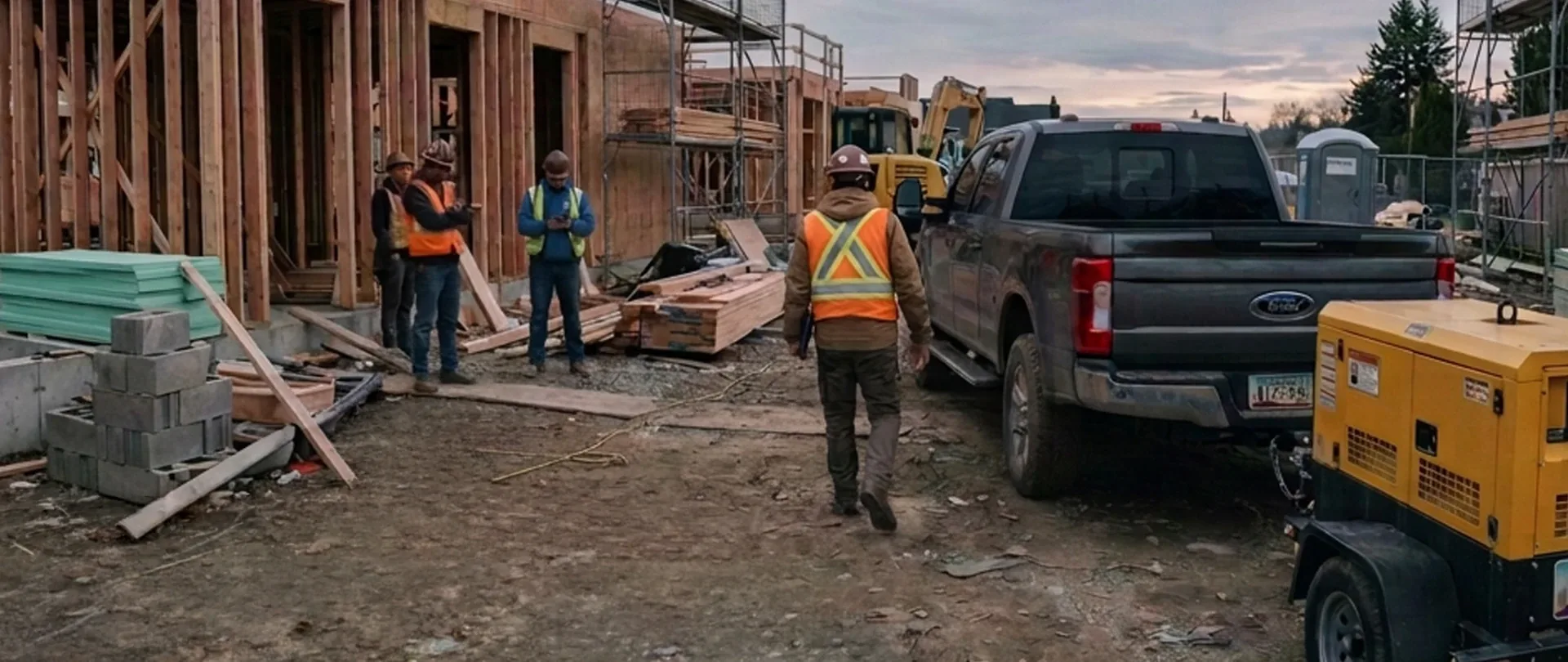
And a good chunk of it looks exactly like what we’ve been writing about all year: a Foreman who should be running his crew is out grabbing a generator instead. A Branch Manager is loading a trailer when he should be running the branch.
The Math Just Got Worse
A “quick favor” delivery was never really free. It just used to be easy to ignore. In a labor market that’s short 349,000 people, with the ones on sites getting older every year, that math doesn’t work anymore. Every hour skilled workers spend driving instead of doing the jobs they were hired for equals additional capacity no one can really afford.
We’ve spent this year breaking down exactly what that costs, one delivery at a time.
Sources: Associated Builders and Contractors, via AP News, “Construction Industry Must Attract 349,000 Workers in 2026” (https://apnews.com/press-release/globenewswire-mobile/abc-construction-industry-must-attract-349-000-workers-in-2026-despite-macroeconomic-headwinds-56d2a9ae06e0767b46bd928e99eee79e) · NAHB Eye on Housing, “Median Age of Construction Labor Force” (https://eyeonhousing.org/2025/10/median-age-of-construction-labor-force-holds-at-42/) · McKinsey Global Institute, “Reinventing Construction Through a Productivity Revolution” (https://www.mckinsey.com/capabilities/operations/our-insights/reinventing-construction-through-a-productivity-revolution) · FMI, via Autodesk Construction Blog (https://www.autodesk.com/blogs/construction/construction-productivity/)
Ready to Move Something?
Stop reading about better delivery, start experiencing it.