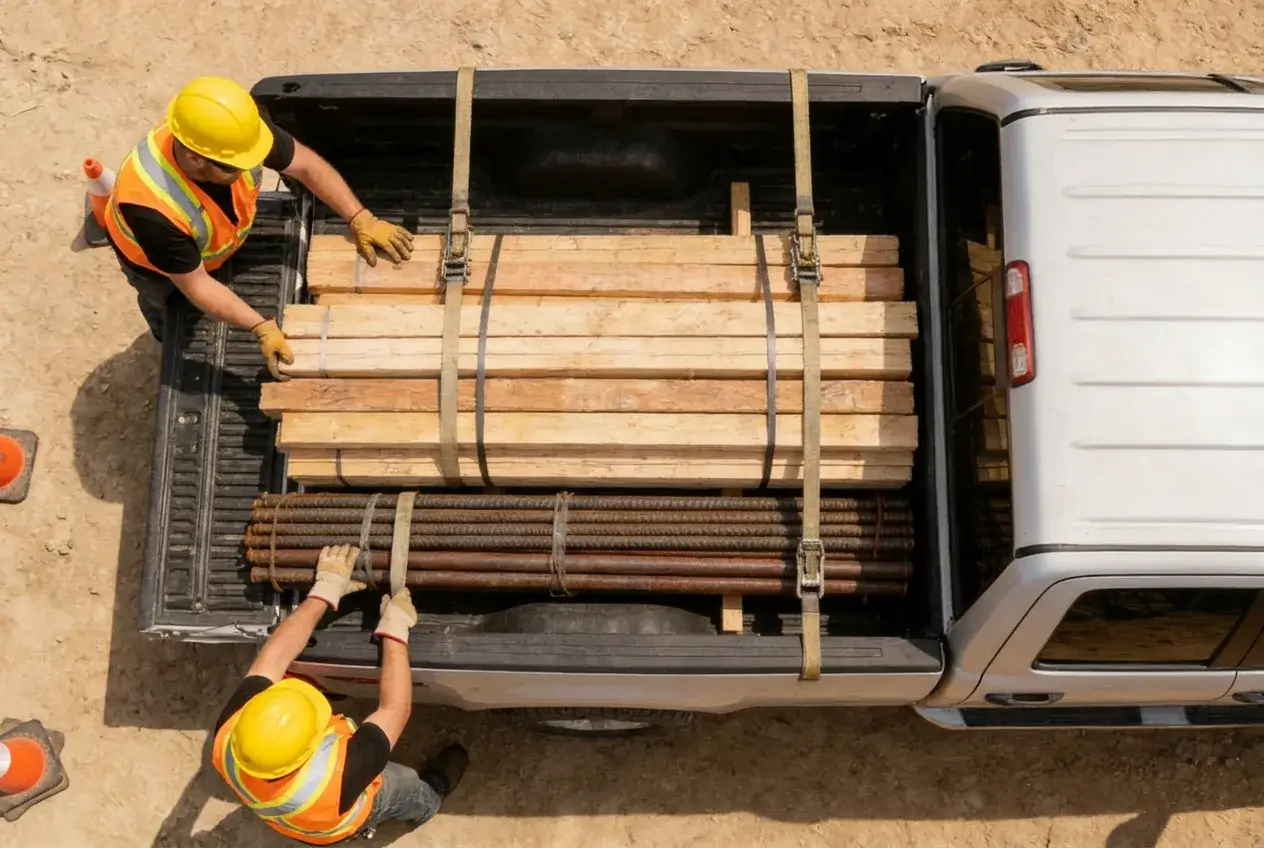
Construction Material Delivery
The New Way Construction Material Delivery Is Being Done
By Team FERO
Construction material delivery used to work like this: you call a supplier, wait on hold, negotiate a delivery window sometime next week, hope the truck shows up on time and deal with the fallout when it doesn't. That model is dying and good riddance.
The new model looks more like what every other industry figured out years ago: on-demand, transparent, trackable delivery that works around the project's schedule, not the carrier's.
Three forces are driving this shift. First, technology. Platforms like FERO use real-time matching algorithms to connect Shippers with nearby Haulers in minutes. GPS tracking, photo documentation and digital proof of delivery replace phone calls and clipboard signatures.
Second, the gig economy model applied to logistics. Independent owner-operators with pickups, flatbeds and equipment trailers provide flexible capacity that scales with demand. No dispatcher, no fleet overhead, no minimum volumes.
Third, AI is streamlining the entire intake process. Natural-language scheduling lets a project manager type 'I need 40 sheets of plywood from Home Depot on Colonial to the Windermere jobsite by 2 PM' and get a structured, priced order back in seconds. Document import reads work orders and purchase orders to auto-populate delivery details.
The result for construction professionals is transformative. Material delivery becomes a utility, reliable, predictable, available when you need it. Project managers spend less time on logistics and more time on building. Crews stay productive because materials arrive when they're needed.
The old way was built for the carrier's convenience. The new way is built for the jobsite.
Ready to Move Something?
Stop reading about better delivery, start experiencing it.