Emergency Hauling
When the Storm Warning Goes Out — Who's Moving Your Equipment?
By Team FERO
When a storm warning goes out, you need a Hauler you've already called before.
Not a broker you're cold-calling at 6pm while radar is showing red. Not a freight company with a 48-hour quote turnaround. A vetted local driver who knows your market, can move equipment and supplies within hours and gets it there before the window closes.
That's FERO. Whether you're a contractor securing a jobsite, a property manager moving emergency equipment or a business owner getting ahead of a shutdown — if you're operating in the South, the Southwest or the Gulf Coast, now is the time to have FERO on your phone.
The emergencies that hit where FERO operates
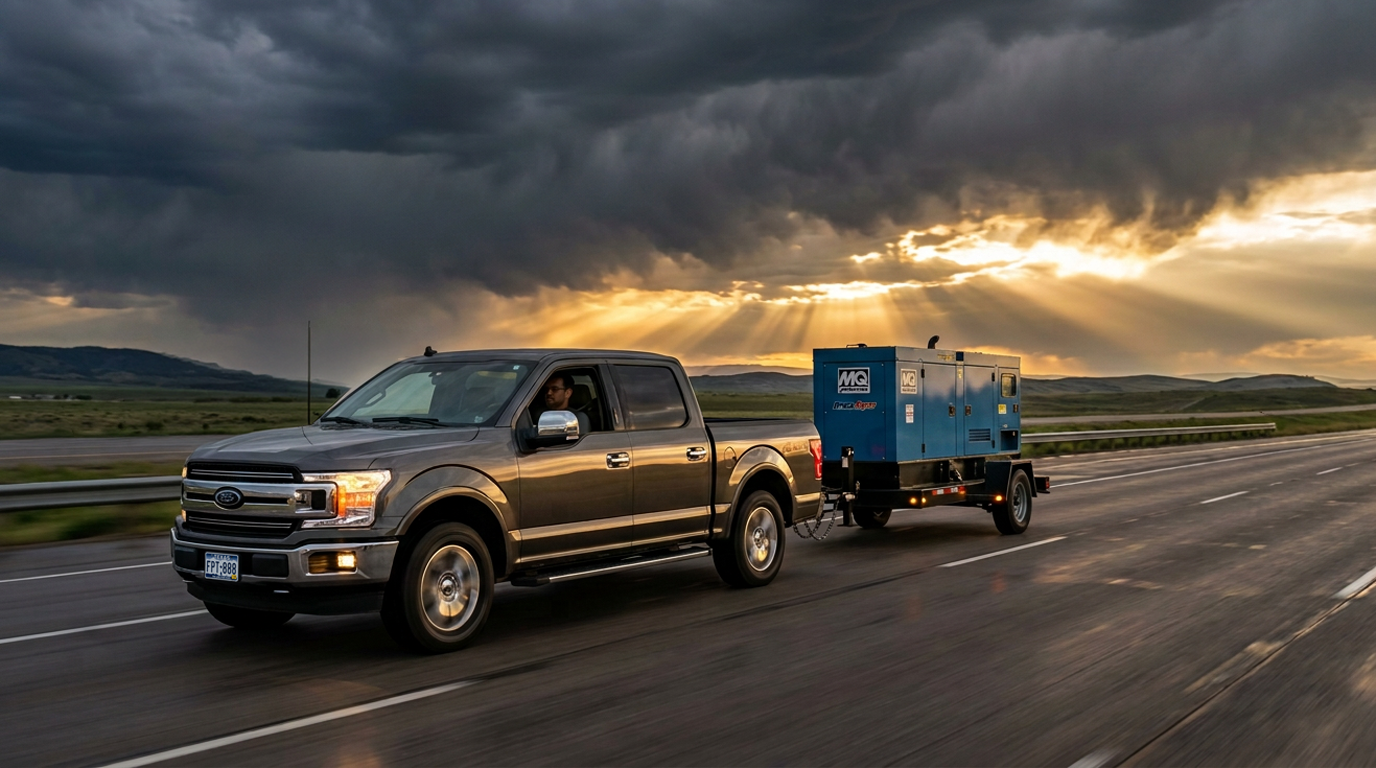
Weather emergencies don't just affect construction sites. They affect everyone who needs equipment moved fast — generators for power outages, pumps for flooding, air conditioning units for heat emergencies, trailers for evacuation staging. The markets FERO serves get hit hard and regularly.
Gulf Coast Hurricanes — Texas and Louisiana
Houston, Beaumont, New Orleans, Baton Rouge and Lafayette don't just sit in a hurricane corridor — they've taken direct hits from some of the most destructive storms in recent memory. Harvey hit Texas as a Category 4 in 2017. Louisiana took three major landfalls in four years — Laura (Cat 4, 2020), Zeta (Cat 3, 2020) and Ida (Cat 4, 2021). These aren't distant possibilities. They're recent history for the people operating in these markets.
When a storm is tracking toward the Gulf, you have a window — sometimes 48 hours, sometimes less — to move equipment off exposed sites, stage emergency supplies, get generators delivered or secure materials before the shutdown. That window closes fast. Having a Hauler relationship before the forecast turns is the difference between an orderly prep and a scramble — whether you're a foreman moving equipment off a low-lying site or a property manager getting portable generators to a facility before power goes out.
A foreman in Houston called FERO at 1:47pm on a Friday. He needed a scissor lift moved eighteen miles to a second site with two hours before his crew walked. FERO matched him with a local Hauler and the lift was there before 4pm. That wasn't a storm — but that's exactly the response speed you need when one is coming and your timeline just got cut in half. Read the Houston story →
Tornadoes — Texas and Georgia
Dallas, Fort Worth, San Antonio, Austin and Atlanta all sit in tornado-prone territory. Tornado warnings move faster than hurricanes — sometimes you get hours, sometimes minutes. Recovery matters as much as prep: getting debris-clearing equipment to a site fast, delivering emergency supplies after roads reopen, moving pumps and generators to affected areas before the next system rolls through.
Texas also ranks third nationally in acres burned by wildfire since 2002, according to FireScience.org — meaning contractors and property owners in Dallas, Houston and San Antonio are managing flood risk, tornado risk and fire risk in the same operating environment.
Georgia ranks second nationally in wildfire acres burned since 2002. The Atlanta metro and surrounding rural corridors face fire risk that often gets overshadowed by the state's hurricane and storm exposure — but it's real and it affects logistics.
Flash Flooding and Monsoons — Texas and Arizona
This one catches people off guard more than it should.
Texas has seen repeated severe flash flooding events that shut down operations across the Dallas-Fort Worth corridor and the Houston metro with little warning. Roads close. Equipment gets stranded. Supply chains that were moving fine at noon are underwater by 3pm. The ability to move fast in the gaps — when roads briefly reopen, when a site or property becomes accessible for a short window — is what separates a fast recovery from a prolonged one.
Arizona's monsoon season runs July through September and brings the same problem to Phoenix, Tucson, Mesa, Chandler and the East Valley. The desert doesn't absorb water. When a monsoon drops two inches in an hour, washes flood, underpasses close and areas that seemed accessible become unreachable. This affects construction sites, warehouses, equipment yards and residential properties alike. Arizona has also burned over 27,000 acres in wildfires since 2002 — the combination of fire and flood risk in the same season makes logistics planning critical.
Joe B. runs the Trenching Division for Sunstate Equipment out of Phoenix. When he needed equipment delivered to Casa Grande, sixty miles away, it was ordered, picked up and delivered in under two hours. That speed matters when a monsoon window opens and you have maybe ninety minutes before the next band rolls through — whether you're moving construction equipment or getting a generator to a facility that just lost power. Read the Phoenix story →
Wildfires and High Winds — California, Texas, Georgia and Beyond
According to FireScience.org, California has burned more acres than any other state since 2002 — and Los Angeles, Riverside and San Bernardino sit in the middle of that reality. Fire season in Southern California isn't a season anymore — it's a year-round operating condition. Evacuation orders, road closures and air quality shutdowns create urgent logistics needs that go well beyond construction: moving equipment out of fire zones, delivering emergency supplies to staging areas, getting air filtration units and generators to facilities in affected areas.
Texas and Georgia both rank in the top three nationally for wildfire acres burned — a risk that operates alongside their hurricane, tornado and flood exposure and affects everyone from large contractors to small business owners to property managers.
FERO operates across the Southern California market with vetted local Haulers in Los Angeles, Riverside, San Bernardino and Anaheim.
Source: FireScience.org — Worst States for Fire Danger, firescience.org/worst-states-fire-danger/
Monsoons and Flash Floods — Nevada and New Mexico
Las Vegas flash floods are underestimated by people who haven't seen one. Drainage in the Las Vegas valley can't keep up with a monsoon cell and roads that look clear can be impassable within minutes. New Mexico monsoon flooding in Albuquerque and the Rio Grande corridor disrupts operations seasonally across industries — not just construction. Both markets require the same thing: a reliable local Hauler who can move equipment and supplies when conditions allow and knows the roads that stay open.
FERO covers Las Vegas and Albuquerque with local Haulers available for same-day loads.
Hurricanes and Tropical Systems — Florida and Georgia
Florida has taken more major hurricane landfalls than any other state in recent years. Irma (Cat 4, 2017), Michael (Cat 5, 2018), Ian (Cat 4, 2022), Idalia (Cat 3, 2023), Milton (Cat 4, 2024) and Helene (Cat 3, 2024) all made landfall in Florida since 2017. Tampa, Miami, Jacksonville and Orlando sit in active zones and hurricane season runs June through November — overlapping directly with peak construction, peak tourism and peak operational activity across every industry.
What people often forget about Helene in 2024 is that it didn't stop at the Florida coast. It tracked inland and caused catastrophic flooding well into Georgia — including the Atlanta corridor. A storm that makes landfall in Florida is not just a Florida problem for anyone operating across the Southeast.
The logistics needs are the same whether you're a contractor moving equipment off an exposed site or a property manager getting portable generators to a facility before power goes out: you need someone who can move fast, knows the market and doesn't require three days to quote a load.
FERO operates across Florida with active Hauler networks in Tampa, Miami, Jacksonville and Orlando, and across Georgia in Atlanta.
What FERO moves in an emergency
Equipment hauling gets the headlines but emergency logistics covers a lot of ground:
- Generators — portable and industrial, delivered to facilities, job sites and properties
- Water pumps and flood control equipment
- Air conditioning and cooling units for heat emergencies
- Construction and debris-clearing equipment
- Trailers for staging and storage
- Materials and supplies for emergency repair crews
- Small equipment transport for any load that needs to move fast
If it fits on a flatbed, pickup or trailer — FERO moves it. Same-day. Upfront pricing. Real-time tracking.
Why FERO is built for this
FERO doesn't work like a freight broker. There's no middleman adding days to your timeline. You post a load, get matched with a local Hauler who knows the market and the load moves.
The Houston foreman who called at 1:47pm on a Friday wasn't a special case — that's how the platform works every day. When a storm compresses your timeline, that speed is the only thing that matters. The Haulers in the FERO network are local to the markets they serve — they're not dispatched from a regional hub three states away when your window opens.
The one thing to do before the next warning goes out
Set up your FERO account before you need it.
The worst time to create an account and figure out the platform is at 7pm when a flash flood warning is active and you're trying to get equipment or supplies moved fast. The best time is a Tuesday afternoon when nothing is on fire.
It takes minutes. And when the weather turns — in Houston, in Phoenix, in Tampa, in New Orleans — you'll already know exactly who to call.
Set up your account now → orders.feronow.com/login
Questions? Call (866) 982-2073 or reach out at [email protected] — we know the markets we serve and we'll make sure you're ready before you need us.
Ready to Move Something?
Stop reading about better delivery, start experiencing it.